


-
About UsFujian Changyuan Textile Co., Ltd. was established in February 2006. It is a modern large-scale private textile enterprise that mainly produces and operates various high-end textile yarns, and the industrial chain connects knitting, dyeing and finishing, clothing and home textile industries.

-
ProductsChangyuan Textile has an annual output of 100000 tons of pure chemical fiber, pure cotton and various functional fiber blended products, and more than 60 kinds of yarn. The dry level of the product strip can reach between 5% and 25% of the "Uster 2001 Bulletin.

-
HRChangyuan has long insisted on treating customers, employees, peers, and society with integrity, and its good reputation has effectively improved the company's competitiveness and sustainable development capabilities.

-
NewsFujian Changyuan Textile Co., Ltd. was established in February 2006. It is a modern large-scale private textile enterprise that mainly produces and operates various high-end textile yarns, and the industrial chain connects knitting, dyeing and finishing, clothing and home textile industries.

-
Contact UsTel: 86-591-62199953/62199955 Fax: 86-591-62199953 Address: Airport Industrial Zone, Changle District, Fuzhou City, Fujian Province (Hunan District) Website: www.fjcyfz.com


News
Sun Ruizhe: five new situations, grasp the new direction of the textile industry "14th Five-Year Plan" development
Release time:
2021-03-08 10:09
Source:
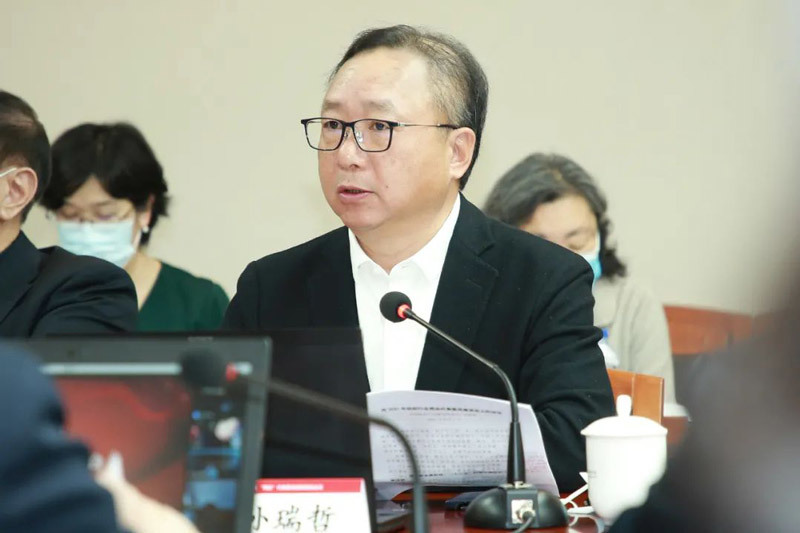
Textile Industry in 2021
Speech at the Forum of Representatives and Members of the "Two Sessions"
Sun Ruizhe, President of China Textile Industry Federation
March 4, 2021
2020 is a very difficult and extraordinary year. In the face of unprecedented environmental tests and development pressures, under the correct leadership of the CPC Central Committee, the Chinese people have overcome difficulties and made decisive achievements in building a moderately prosperous society in an all-round way. Among them, the textile industry has made outstanding contributions in fighting the epidemic, stabilizing employment, protecting people's livelihood and promoting development. The goal of textile power has been basically achieved, and the industry has handed over a textile answer sheet. Wailan Zhuang Nian Xin looking back, dare to continue before others. At present, a new journey of building a modern socialist country in an all-round way has begun. On the basis of the initial establishment of a strong textile country, how to achieve a new leap forward in the industry is an urgent issue we are facing. To complete this project, we need to base ourselves on reality, clarify changes and face the future.
1. has entered a new stage of development: the development achievements of China's textile industry during the 13th Five-Year Plan period The development of the industry in 2020 has withstood a huge test and shown strong resilience; the industry has maintained a warming trend and continued marginal improvement. Co-ordinate safety and development, the industry to maintain the development of the force, production and operation steadily to good. In 2020, the industrial value added of enterprises above the scale of the textile industry decreased by 2.6 year-on-year, which continued to narrow compared with the previous three quarters. The industrial added value of the industrial textile industry increased by 54.1 year-on-year; the industrial added value of the chemical fiber industry and the home textile industry changed from negative to positive. Enterprise benefits continue to repair. In 2020, textile enterprises above the national scale will achieve an operating income of 4519.06 billion yuan and a total profit of 206.47 billion yuan, and the decline will continue to narrow. The operating income margin of textile enterprises above designated size was 4.6 per cent, a significant improvement over the beginning of the year. Among them, the operating income and total profit of industrial textiles increased by 32.57 and 203.21 respectively, and the profit margin was 11.42. Coordinating domestic demand and opening up, the industry is rejuvenating the market, and the internal and external markets are improving together. In 2020, the retail sales of clothing, shoes and hats and knitting textiles of units above the national quota decreased by 6.6 percent year-on-year, a decrease of 5.8 percentage points from the previous three quarters; at the end of July, the retail sales of online wear goods nationwide had exceeded the level of the same period last year, with a year-on-year increase of 5.8 percent. New models such as live e-commerce and cloud exhibitions are developing rapidly. Driven by epidemic prevention materials, the textile industry took the lead in achieving positive export growth in various industrial fields, with the export scale reaching a new high since 2015. In 2020, China's textile and clothing exports totaled 291.22 billion billion US dollars, up 9.6 year-on-year, and the growth rate was 11.1 percentage points higher than the previous year. Among them, textile exports were 153.84 billion billion US dollars, up 29.2 per cent year-on-year, accounting for 58.2 per cent of the industry's exports from 44.3 per cent last year, while clothing exports narrowed to 6.4 per cent year-on-year at the end of the year. Highlight responsibility and responsibility, the industry to show the ability to protect, people's livelihood value continued to strengthen. The industry quickly formed the production and supply capacity of emergency prevention and control materials such as protective masks, medical protective clothing and isolation clothing, which effectively guaranteed the life and health of the people and made a significant contribution to the prevention and control of global epidemics and the rapid recovery of the domestic economy. In 2020, China exported a total of 224.2 billion masks, of which 65 billion were medical masks, with a total value of more than $50 billion, and 2.31 billion pieces of protective clothing, of which 0.773 billion were medical protective clothing, with a total value of more than $6 billion. The export volume of masks and protective clothing accounted for more than 20% of China's textile and clothing exports in 2020, of which mask exports accounted for 34.06 of textile exports. The steady development of the industry in 2020 ensures the perfect ending of the "13th Five-Year Plan" of the industry. During the "Thirteenth Five-Year Plan" period, the textile industry practiced the transformation from Chinese manufacturing to Chinese creation, the transformation of Chinese speed to Chinese quality, and the transformation of Chinese products to Chinese brands. The advanced industrial foundation and the modernization of the industrial chain have been significantly improved. The industry has formed the most complete industrial system in the world, and its manufacturing capacity and international trade scale have long ranked first in the world. A study by the Chinese Academy of Engineering compared 26 manufacturing industries in my country with global manufacturing powers. The textile industry is one of the five industries in the world's advanced level. During the 13th five-year Plan period, around the goal of building a textile power of "science and technology, brand, sustainable development and talents", the formation of a modern textile industry system has been accelerated, and the high-quality development of the industry has taken a solid step. The textile industry has unswervingly implemented the development concept of "innovation, coordination, green, openness and sharing", and has formed a vivid practice at the industry level.
The (I) industry always puts innovation at the core of development, and the role of innovation support continues to strengthen. First, scientific and technological innovation has achieved remarkable results. Scientific and technological innovation in China's textile industry has gone from "following" to "following, running and leading. From design to materials, from technology to equipment, the closed-loop innovation ecology of the whole industry chain makes the industry one of the most active industrial sectors in innovation. A total of 11 achievements won the National Science and Technology Award from 2016 to 2019. Among them, "dry-jet wet spinning thousand-ton high-strength/100-ton medium-model carbon fiber industrialization key technology and application" won the first prize of national scientific and technological progress. In the fiber materials, green manufacturing, textile machinery and other fields, a number of "stuck neck" technical problems have been broken. Second, the application of innovation is active. Product development toward functional, green, intelligent direction to accelerate development. The application of textile products in the fields of medical and health, aerospace, national defense and military industry, civil construction, rail transit, environmental protection, sports and leisure continues to extend. The innovation ability of fashion design has been improved obviously, the original trend brand has gradually matured in terms of quality, creativity and culture, and the voice of fashion has been steadily improved. Third, model innovation is becoming more and more mature. The deep integration of the textile industry and the digital economy has given birth to a number of new scenarios, new models and new formats. The textile and garment industry is the most active industry in the innovation of social e-commerce and live e-commerce. Fourth, the innovation system continues to improve. During the "13th Five-Year Plan" period, the textile industry has 61 national enterprise technology centers and 4 sub-centers. At present, there are 17 national manufacturing innovation centers and 2 textile industries, namely, the national advanced functional fiber innovation center and the national advanced printing and dyeing technology innovation center.
The (II) industry always regards coordination as an important direction, and correctly handles the major relations in development. First, the optimization and adjustment of the industrial structure. During the "13th Five-Year Plan" period, the proportion of fiber consumption of the three major end products for clothing, household and industrial use was adjusted from 46.4:28.1:25.5 in 2015 to 44:27:29 in 2019. In 2019, China's total textile fiber processing reached 56 million tons, accounting for the proportion of the total global fiber processing remained at more than 50%, chemical fiber production accounted for 71.7 percent of the world, chemical fiber differentiation and functionalization rate, high-performance fiber production capacity, industrial fiber processing volume, etc. increased significantly. Textile and dyeing are organically connected, production, supply and marketing are coordinated, large and medium-sized enterprises are developing in coordination, and the advantages of the textile industry chain and supporting system are more consolidated.
Second, the regional layout has a long way to go. The direction of the gradient transfer of the textile industry is highly unified with the needs of regional coordinated development. At present, 34 of the 36 textile industry transfer pilot parks are located in the central and western regions. The regional linkage of industries is promoting the transfer of resources from south to north, from east to west, and from coastal to inland. In terms of regional operating income, the eastern region will account for 84.87 per cent, the central region for 11.94 per cent and the western region for 3.19 per cent in 2019. There is a huge space for coordinated regional development.
Third, industrial synergy is deepening. With the manufacturing industry as the core, the integration of the textile industry and the cooperation between industry and finance have achieved important results. The digital, networked and intelligent transformation of the industry is going deeper. During the "13th Five-Year Plan" period, the industry has achieved remarkable results in the construction of intelligent production lines such as chemical fiber, spinning, printing and dyeing, nonwovens, knitting, clothing, and home textiles. Service-oriented manufacturing and personalized customization are developing rapidly. The capital operation ability of industry enterprises is constantly improving, and the financing channels are constantly opening up. By the end of 2020, there were 192 listed textile and apparel companies in Shanghai and Shenzhen, with a total market capitalization of about 1965.873 billion billion yuan. Among them, a total of 18 new shares will be listed in 2020, accounting for 4.55 percent of the annual IPO enterprises, the fastest growth rate in the past two decades.
The (III) industry has always taken green as its strategic direction, and the pattern of green and low-carbon circular development has accelerated.
The construction of industry social responsibility has been continuously deepened. The industry continues to promote the construction of social responsibility, and the CSC9000T system has covered the factories built by domestic textile enterprises overseas. The content dimension of social responsibility construction continues to expand, the connotation of the responsibility criterion continues to extend, deepen the multi-dimensional responsibility co-governance, and realize the common prosperity of the industry.
The level of green development in the industry has been steadily improved. The clean production level of the textile industry continues to improve, the green technology innovation system is more perfect, and the production system, circulation system and consumption system of green and low-carbon circular development are being formed. During the 13th Five-Year Plan period, 251 kinds of green design products, 91 green factories, 10 green supply chain enterprises and 11 green design demonstration enterprises were included in the list of green manufacturing system construction by the Ministry of Industry and Information Technology. There are 45 green manufacturing groups and industry standards (including those under research) revised by the textile industry. The products of 34 chemical fiber enterprises have passed the "green fiber" logo certification. From 2015 to 2020, the water consumption per unit product in the printing and dyeing industry will drop by 17%, the comprehensive energy consumption per unit product will drop by 15%, and the water reuse rate will increase from 30% to 40%.
The (IV) industry has always adhered to a high level of opening up to the outside world, enhancing the internal and external linkages of development, and deepening the degree of international cooperation.
First, the scale of opening up is expanding. China's textile and clothing exports ranked first in the world. According to WTO data, China's textile exports in 2019 were $120 billion billion, or 39.2 percent of the world's total, and clothing exports were $152 billion billion, or 30.8 percent of the world's total. Chinese enterprises have set up textile and garment production, trade and product design enterprises overseas in more than 100 countries and regions.
Second, the opening pattern is more perfect. China's textile and apparel export market and investment structure continue to optimize. While consolidating the advantages of the traditional market, the industry is actively exploring new markets. During the "13th Five-Year Plan" period, Chinese textile companies invested more than US $1.8 billion billion in the five Mekong countries, accounting for about 26.6 percent of the total global investment in the same period. In 2019, exports to the five Mekong countries accounted for 9.2 percent of the industry's total exports.
Third, the level of openness is deeper. China's textile industry from the product to go out, production capacity to go out to the brand to go out and capital to go out. With the rapid development of cross-border e-commerce, a number of outstanding enterprises such as Shein and ZAFUL have emerged. International exhibitions are more professional and branded, and have become a world-class business platform.
The (V) industry has always adhered to the concept of sharing, people-oriented, people first, and has played an important role in meeting the needs of the people for a better life.
The development of the industry effectively guarantees the needs of people's livelihood. When China's per capita GDP is 10000 US dollars, the quantity and structure of per capita fiber consumption have reached the level of 2-30000 US dollars per capita GDP in moderately developed countries. Fiber consumption has reached the level of moderately developed countries before the level of economic development.
The industry promotes effective employment. The textile industry has driven more than 2000 million people directly employed in the whole society. The development of the industry directly benefits "agriculture, rural areas and farmers" and provides jobs with suitable difficulties and broad prospects for rural migrant workers.
The industry promotes urban and rural development. County and township economy is the most important form of textile industry cluster. The township-level cluster accounts for about 48% of the industrial clusters that have established a pilot relationship with the China Textile Federation. The development of textile industry cluster has played a key role in promoting rural revitalization and new urbanization development, and building a new relationship between workers and farmers in urban and rural areas.
The industry promotes regional linkage and safety and stability. The center of gravity of the textile industry is highly overlapping with the center of gravity of the Chinese economy. The regional linkage and gradient transfer of industries have effectively activated the development potential of the old, young, border and poor areas, and made positive contributions to maintaining social stability and long-term stability in the border areas.
The industry has made important contributions to poverty alleviation. "Qiao daughter-in-law project" and "beautiful mother project" are beneficial explorations for industries to narrow regional development differences. At the National Poverty Alleviation Summary and Commendation Conference, 16 individuals and 4 collectives in the textile industry won the honor. Textile non-heritage ambassador Bai Jingying won the title of "National Model of Poverty Alleviation.
During the "13th Five-Year Plan" period, the development achievements of the textile industry are inspiring and exciting. However, the data is still not enough to represent all the facts, and the achievements, contributions and values of the industry have not been fully demonstrated. For example, the textile industry in recent years, the integration of the two industries, the integration of the two in-depth development, new economy, new formats, new models have emerged in large numbers. However, changes in economic patterns have brought new challenges to statistical work. Some textile and garment enterprises that carry out model innovation and format innovation are included in the category of service industry statistics. Under the new economic scenario, some flexible employment models and new types of occupations have also caused traditional employment statistics to fail to objectively reflect the employment situation in the industry, and the employment scale of the textile industry has been partially underestimated. In addition, the industrial textile industry is developing rapidly, and its application fields continue to expand. Nonwovens coils, medical textiles, sanitary textiles, filtration textiles, geotechnical construction textiles and structural enhancement textiles are relatively rapid development and large-scale In the field, the economic contribution continues to increase. In 2020, the fiber processing volume of my country's industrial textile industry reached 19.12 million tons, a year-on-year increase of 18%. According to preliminary estimates, it accounts for about 33% of the total textile fiber processing. In particular, it should be noted that glass fibers that should be included in textile fibers in accordance with international practices are not yet included in the statistics; according to estimates, the total output value of the industrial textile industry is about 1.6 trillion yuan. However, limited by the traditional statistical system, the operating income of enterprises above the scale of industrial textiles is only 319.837 billion yuan, and a large number of economic contributions are not reflected in the category of industry statistics. There is also a huge gap with the export of industrial textiles of US $87.442 billion in 2020 customs statistics. During the "13th Five-Year Plan" period, the social cognition of "technology, fashion, and green" in the textile and apparel industry has been continuously strengthened, but the transformation of the social level of awareness of the value and contribution of the industry still requires further efforts.
2. Adapting to the New Normal Development: The New Situation of China's Textile Industry under the Centennial Change
In the prevention, control and adaptation of the epidemic, the global economy is ushering in restorative growth. The IMF forecasts that the global economy will grow by 5.5 per cent in 2021. However, the economic recovery is unstable, uneven and fragile.
The gap in epidemic prevention and control has led to new divisions. The gap between regional epidemic conditions and medical capacity is creating a gap in economic performance. This situation is further exacerbated by the uneven distribution of vaccines. According to a WHO release in February, more than three-quarters of vaccinations took place in only 10 countries and were concentrated in developed economies.
The backlash of relief policies poses new risks. Fiscal stimulus packages were widespread during the epidemic, with global debt levels reaching record highs in 2020, increasing by $24 trillion, and debt risks increasing. The significant increase in global liquidity has driven significant price increases in raw materials and abnormal volatility in capital markets, which has had a significant impact on entities.
The geopolitical game brings new variables. The epidemic has made countries pay more attention to economic security and protectionism has risen. The strategic game between China and the United States is an important variable. Biden's replacement of "America First" with "America Return" is to strengthen relations with Western allies to check and balance China's development. There are uncertainties in the future development of economic and trade relations.
Overall, the characteristics of the century-old change are continuing to evolve, and the impact of the epidemic on the future world is far-reaching, and we need to adapt to the new normal.
(I) security and stability is becoming a key factor affecting the layout of the industrial chain.
Under the 100-year change, geopolitical risks, economic and trade risks, social and cultural risks, scientific and technological innovation risks, data network risks and resource ecological risks are superimposed on each other, which continue to affect the layout of the global industrial chain. Building more robust and resilient production networks is becoming a common demand in different countries. The outbreak has driven a shift in the logic of the global industrial division of labor from efficiency priority to comprehensive trade-offs between safety and efficiency. Strengthening supply chain autonomy and stability in key areas has become a priority for more and more countries. On February 24, U.S. President Biden signed an executive order to sort out and review key supply chains. This is the first industry "self-inspection and self-inspection" ordered by the highest level in the history of the United States after the war ". The purpose of combing is to reduce dependence on other countries in key industries. Developed countries such as the United States and Europe continue to introduce tax reduction and subsidy policies for the manufacturing industry to attract the industrial chain to move back and divert. The trend of shortening and internalization of global value chains is accelerating.
In the face of new changes, it is necessary to accurately grasp the trend of localization and diversification of the industrial chain supply chain. On the one hand, consolidate the manufacturing advantages of domestic industries, strengthen independent control and irreplaceability, and better play the role of people's livelihood industries; on the other hand, we must expand opening up and promote the diversified layout of the supply chain to reduce market risks and trade risks. We should give full play to the key supporting role of industrial policy. International practice in the epidemic proves that the more rational the industrial policy and the more efficient the governance system, the better the speed and quality of regional economic recovery. Under a century of changes, the quality of industrial development and the position of competition and cooperation largely depend on the government's policy direction. It is necessary to fully integrate the national mental resources with the construction of the industrial chain. National mental resources are cognitive advantages formed through long-term accumulation. The overall awareness of young international consumers of Chinese culture and the willingness to contact Chinese brands have increased significantly. We should make full use of the advantages of national mental resources and accelerate the extension to the high end of the industrial value chain.
(II) two-way cycle is becoming the core logic of future market layout
Taking the domestic market as the main body and the double circulation of domestic and international markets is a strategic choice according to the changes of internal and external environment, and it is also a fundamental change of market characteristics in the new period.
Globally, the international market began to pick up slowly. The IMF expects global trade to grow by 8.1 percent in 2021. Among them, Europe and the United States and other major consumer markets will achieve a general recovery. However, due to international geopolitics and other factors, global trade is still unstable. For example, the United States and its Western allies have blocked Xinjiang cotton and its products from entering the international textile and apparel supply chain in a politicized manner. The development of trade regionalization has opened up new space for China's international trade. Take RCEP as an example, its effective implementation will promote China's 1/3 trade to achieve zero tariff, and the degree of trade facilitation will be greatly improved. According to customs statistics, the total import and export trade of textiles and clothing between China and RCEP member countries in 2019 accounted for about 28.8 of the total foreign trade of the industry in that year. High-quality trade agreements will help consolidate our foreign trade fundamentals.
From a domestic perspective, the domestic demand market has become a strategic basis for industrial development. As the world's most growing consumer market, China's market space is huge and resilient, showing a strong consumer leadership. UNIQLO surpassed ZARA in fiscal year 2020, largely due to the steady growth of the Chinese market. As our country advances towards common prosperity, consumption upgrading is the general trend. On the other hand, China's economy is entering the era of stock economy, and consumption is also showing a trend of differentiation. From the basic demand of the market to the network traffic dividends are showing a saturated situation, extensive business space is not much, improve the quality and efficiency of supply has become the core logic. The income gap and the asynchronous development have brought about the classification of the consumer market. At present, about 0.61 billion of our population has a monthly per capita income of about 1000 yuan. We should take meeting the domestic market as the starting point and foothold of industrial development, constantly improve the quality, efficiency and level of supply, and deal with the uncertainty of the external environment with the certainty of the domestic market.
(III) science and technology innovation is becoming a strategic support for industrial development
The new technological revolution has profoundly changed the factor structure, value composition and industrial ecology of the global industry in the way of creative destruction. Scientific and technological innovation has become the core source of industrial chain control and new advantages of competition and cooperation, and the international competition around key technologies, important standards and innovation systems is becoming increasingly fierce. Developed economies are pushing for new international intellectual property rules with "super-TRIPS" characteristics, seeking higher substantive rights. This means that companies will face stricter intellectual property inspections, higher innovation management requirements, and greater pressure on technology monopoly. With the rise of China's industrial status and technological strength, it is more and more difficult for us to introduce core technologies from outside. In the future, only by insisting on scientific and technological self-reliance can we win the initiative.
It is necessary to strengthen basic innovation as the master switch for the self-reliance of industrial science and technology. The level of basic research and innovation is the premise and foundation for the realization of scientific and technological self-reliance, which determines the foundation and stamina of industrial development. At present, major countries in the world are strengthening the strategic deployment of basic research, and the focus of scientific and technological competition is constantly moving forward. In 2019, China's basic research accounted for more than 6% of R & D funding for the first time, and is expected to exceed 150 billion yuan in 2020. The industry should comply with this trend, increase basic innovation in new materials, new processes and other fields, make up for the shortcomings of development, and establish first-mover advantages.
To improve the innovation ecology as the main engine of industrial science and technology self-reliance. The ability of innovation incubation and transformation is an important dimension of global science and technology competition. At present, multi-disciplinary cross-integration, multi-domain technology integration and multi-subject cross-border cooperation have become the norm. The scale and complexity of investment in technological innovation is unprecedented. In order to realize continuous innovation and application transformation, it is necessary to create a professional and open innovation ecology, realize the organic combination of production, teaching, research and application, improve the speed and effectiveness of industrialization and commercialization of technological innovation achievements, and effectively transform scientific and technological advantages into industrial advantages.
The protection of intellectual property rights should be regarded as a new project for the self-reliance of industrial science and technology. China is changing from a big country of intellectual property introduction to a big country of intellectual property creation. Intellectual property is the core element of industrial competitiveness and the focus of international disputes. Entering the new development stage, the country is comprehensively strengthening the protection of intellectual property rights from a strategic perspective to stimulate innovation vitality. The industry should look at the protection of intellectual property rights from the perspective of the overall national security concept, enhance awareness and ability, strengthen the creation, reserve and layout of intellectual property rights in key areas, and realize the whole chain and systematic protection.
(IV) green transformation is becoming a rigid requirement for global industrial development
From the environment to geopolitics, from society to economic development, climate change is having a huge unknowable and uncertain impact on the global economic system and industrial system. The global production system, circulation system, consumption system and investment system are all changing towards green direction. Green development is becoming an important source of sustainable competitiveness and future discourse power of industrial development. On his first day in office, Biden confirmed that the United States would return to the Paris Agreement. Under the goal of carbon peak and carbon neutrality, China is also speeding up the construction of a green and low-carbon circular development economic system, and has made a comprehensive deployment of green transformation in the form of policies. As green has become a rigid requirement for global economic development, industrial green transformation is urgent.
Green constraints are shifting from a single dimension to a systematic direction. The development of technology makes the environmental changes caused by products traceable. From design, research and development to production and circulation, the environmental costs of all links in the industrial chain have become more transparent and measurable. The regulation of green development can cover the whole life cycle of the product. At the same time, the development of supply chain management has also promoted the transmission of green constraints from the enterprise itself to the upstream and downstream of the industrial chain and various stakeholders. Systematic constraints force a full range of upgrades.
Green development is shifting from cost constraints to sources of value. The whole industry chain green manufacturing system around green materials, green technology, green production and circular development is taking shape. Technological innovation and system optimization enable enterprises to achieve the coordination and unity of economic, ecological and social benefits. The service of green manufacturing has become a trend. New models and new formats, represented by contract energy management and third-party governance of environmental pollution, have accelerated their development. With the continuous improvement of market trading mechanisms such as emission rights, water rights and carbon emission rights, the source of value for enterprises has begun to come from direct transactions in the market. For example, Tesla will generate nearly half of its revenue by selling carbon credits in 2020. In the face of the new situation and new changes, the industry should make full use of various tools and methods to enhance the ability to turn green water and green mountains into golden mountains and silver mountains.
The (V) digital economy is becoming an important source of competitive advantage for global industries.
The digital economy has triggered profound changes in the mode of production, organization and innovation paradigm, and is becoming a universal form of the global economy. The outbreak has accelerated the digitization process. The share of global e-commerce will grow two to five times faster in 2020 than before the epidemic. The digital economy has become an important force leading the future economic development, and the international competition around data resources, infrastructure and industrial ecology is becoming increasingly fierce.
Data becomes a strategic element resource. The process of data resourceization and assetization is accelerating. Enterprises can obtain accurate business insights and decision-making basis through data mining, and then realize the improvement of total factor productivity. Data elements have an incremental marginal effect, and the amount of data mastered becomes an important source of competitiveness. Countries have increased their forward-looking layout in data, algorithms and other fields from a strategic height. The blockade and access, protection and use of data are becoming an important concern of global industrial policy and value game. Since 2020, more than 30 countries and regions around the world have announced a digital tax on Internet companies. The industry deposits a large amount of consumer data and industrial data, we need to understand the value boundary of digital resources, improve the ability of data application and protection.
Industrial Internet has become a key support. As an important underlying architecture for the development of the digital economy, the Industrial Internet is an important support for unleashing the potential of intelligent manufacturing, as well as the key to the birth of new models of new formats such as interconnected manufacturing and service manufacturing. In 2020, the industrial Internet industry is expected to contribute more than 16% to the growth of the digital economy. China has issued a new three-year action plan to further implement the industrial Internet innovation and development project. In the future, industrialization and informatization will be integrated and developed in a wider range, deeper degree and higher level. The industry should seize the opportunity, constantly improve the industrial Internet infrastructure construction, and inject new vitality into the industrial development with new manufacturing methods and business models.
Clustering of the digital economy has become a trend. On the one hand, the cluster development of the digital economy is manifested in the cluster development of the digital economy itself; on the other hand, it is manifested in the digital transformation of traditional clusters. At present, all world-class advanced manufacturing clusters are data clusters. The integration of industrial clusters and digital clusters is the general trend. Industrial agglomeration constitutes an important foundation for the efficient cycle of industrial digitization and digital industrialization. For example, Zhili Town, as a famous children's clothing industry cluster, has bred more than 8000 e-commerce enterprises. As a highly clustered industry, the textile industry should fully release the multiplier effect of the digital economy and enhance the level of cluster development.
3. Construction of New Development Pattern: The Development Direction of China's Textile Industry in the Period of the 14th Five-Year Plan
"Those who seek great things are the first to focus on the pattern." In order to make greater achievements in the new historical period, the textile industry needs to find the right position, clarify the direction and clear the path.
We must proceed from the reality of the industry and accurately understand the new development stage, which is the primary stage of socialism and the stage of high-quality development. Clarify the value and responsibility of the industry, which is the direction of the development of our industry.
We must proceed from the changes in the situation, thoroughly implement the new development concept, coordinate the century-old changes and the new development situation, adhere to the problem orientation, enhance risk awareness, and grasp strategic opportunities. This is the direction of our industry development.
We should proceed from the overall strategic situation, actively build a new development pattern, enhance the vitality, competitiveness and contribution of the industry in the double cycle, and achieve a high-quality balance between supply and demand, which is the path of the development of our industry.
During the "14th Five-Year Plan" period, the textile industry will promote the high-quality development of science and technology, fashion and green with a systematic concept. The industry no longer highlights the incremental target, but should take the quality improvement and connotation expansion of the industry as a breakthrough. Comprehensively improve the core innovation ability, sustainable development ability and resource allocation ability, so that the textile industry has become a pillar industry of national economic and social development, a basic industry to solve people's livelihood and beautify life, and an advantageous industry for international cooperation and integrated development. When China basically realizes socialist modernization in 2035, China's textile industry will become the main driver of world textile science and technology, an important leader of global fashion and a powerful promoter of sustainable development.
(I) strengthen the strategic support of science and technology, to achieve independent control, self-reliance and self-improvement
Enhance the ability of independent innovation in science and technology. Strengthen key technological breakthroughs. Focus on new fiber materials and equipment, textile green manufacturing technology and equipment, advanced textile products and equipment, textile intelligent manufacturing key equipment and other fields to strengthen R & D innovation. Strengthen basic research and original innovation, and enhance the supply of common basic technologies. Efforts to solve the "stuck neck" technical problems. Focus on filling the cutting-edge technology gaps in the field of carbon fiber, para-aramid, polyimide and other high-performance fibers and their composites.
Improve the scientific and technological innovation system. Strengthen the construction and improvement of innovation platforms such as industry key laboratories and technological innovation centers, and promote the optimal allocation and resource sharing of scientific research forces in key enterprises, scientific research institutes, and universities. Promote the construction of industrial textiles and other national manufacturing innovation centers. Support enterprises to lead the formation of innovation consortium to undertake major scientific and technological projects. Actively integrate into the global innovation network and strengthen international cooperation.
Improve the efficiency of the transformation of scientific and technological achievements and the level of industrialization. Improve the comprehensive management system of intellectual property rights, and open up the whole chain of intellectual property creation, application, protection, management and service. Strengthen the standard system construction. Strengthen the revision of basic general and industrial common technical standards, and promote the integration of domestic and international standards.
Improve the scale and quality of scientific and technological talents. Give full play to the role of leading talents in scientific and technological innovation in the industry and establish an international leading scientific and technological innovation team. Develop high-level research-oriented textile disciplines and cultivate basic research talents. Strengthen the organic connection of vocational education, continuing education, and general education, and expand the training scale of textile professional and compound talents. Improve the science and technology evaluation system and optimize the innovation ecology.
(II) smooth industrial circulation and improve the modernization level of industrial chain supply chain
Consolidate the foundation and shape the advantages of the manufacturing system. Improve the whole industry chain manufacturing system from fiber material production, textile dyeing and finishing, to terminal product manufacturing. Focus on strategic new materials and key areas to promote the development of industrial textiles. Improve the statistics and standards system related to industrial textiles. Accelerate the digital transformation of the entire industry chain. Vigorously develop intelligent textile equipment and build intelligent textile workshops and factories based on emerging information technology. Accelerate the construction of new infrastructure such as industrial Internet platform and big data center in textile industry. Deepen the integration of the two industries, develop new manufacturing models and new formats such as service-oriented manufacturing, and build an intelligent and flexible supply chain.
Gather resources and promote the intensive development of industries. Deepen the cooperation between industry and finance, broaden the financing channels of enterprises, and promote the docking of enterprises and the capital market. Enhance the ability of enterprises to use financial instruments such as asset securitization to solve development problems. Encourage mergers, acquisitions and alliances between enterprises to achieve complementary resource advantages. Appropriately enhance industrial concentration and cultivate a number of world-class textile and garment enterprises with international competitiveness. Give full play to the role of resource agglomeration and integration of public service platforms, and promote upstream and downstream cooperation in the industrial chain, industry-university-research collaboration, and the integration and development of large, medium and small enterprises.
Enhance capacity and strengthen industrial safety ecology. Combing the key areas and weak links of the industrial chain, making up the short board and forging the long board. We will vigorously develop coal-based chemical fiber raw material technology and bio-based chemical fiber technology, guide cotton multi-regional planting, and ensure the safety of textile raw material supply. Actively respond to the challenges brought by the "Xinjiang Act" and maintain the security and stability of the supply chain of China's cotton textile industry chain. Accelerate the formation of Xinjiang cotton and its products consumer awareness and geographical indication brand awareness, expand the domestic market consumption. Strengthen the prevention of financial risks and prevent the impact of abnormal international capital flows on industrial stability. Actively respond to new industrial issues such as data network security and innovation overlay risks.
(III) based on expanding domestic demand and promoting the dynamic balance between supply and demand
With quality improvement as the core, optimize the product supply system. Strengthen the research on popular trends, the development and application of new materials and technologies, and strengthen product innovation to better meet the needs of the people for a better life. Increase the development of smart wear, green health products, etc. Promote large-scale customized services for textile products to adapt to personalized consumption trends. With technological innovation and application innovation, we will expand the application of textile products in strategic fields related to the national economy and people's livelihood, such as medical and health care, national defense and military industry, aerospace, and constantly expand new space for consumption.
With brand building as the core, leading the trend of consumption upgrading. Enhance cultural self-confidence and brand self-confidence, and use "masters, big names, and big events" as the starting point to create a fashion ecology with Chinese characteristics, world influence, and characteristics of the times. Improve the level of fashion creativity and form a group of independent brands with Chinese characteristics and cultural connotations, "National Tide Brand". Promote the research and application of brand value evaluation system. Continue to promote the innovation and market-oriented development of textile intangible cultural heritage.
With channel construction as the core, improve the efficiency of consumption conversion. Actively promote online and offline multi-channel integration. Accelerate the application of new models such as live e-commerce and community marketing, and new formats in the industry. Explore the creation of industry consumption festival, rich consumption scene. Promote channels to sink to low-tier cities and rural markets to fully release consumption potential. Actively promote the optimization and upgrading of professional markets and digital transformation. Create key fashion weeks and key exhibitions to enhance influence and drive consumption.
(IV) promote a high level of opening up to the outside world and create new advantages in international cooperation and competition
Consolidate foreign trade advantages. While deepening the development of traditional markets, we should explore emerging markets and create a diversified export market pattern. Focus on professionalism and influence, strengthen international exhibition mode innovation and content innovation. We will actively develop new modes of foreign trade, such as cross-border e-commerce, and cultivate new growth points for foreign trade. Promote industry quality standards, certification and accreditation and international integration, with products "same line, same standard and same quality" to open up domestic and foreign trade blocking points. Track new changes in trade policy and do a good job of risk monitoring and early warning.
Introduction of quality resources. Attracting global resource elements with a large domestic cycle. Key materials, key equipment, core technology as the focus of the introduction of resources. Explore the establishment of an open circulation and sharing collaboration mechanism for data elements. Actively expand the import of high-quality products and services to meet the growing domestic consumer demand and industrial demand. Encourage enterprises to carry out global layout through mergers and acquisitions, holding, strategic investment and other ways. Guide foreign investment to invest more in advanced manufacturing, energy conservation and environmental protection and other fields, and promote the transformation and upgrading of the domestic textile industry.
Promote capacity cooperation. Balance the relationship between domestic and international industrial transfer, scientifically guide the international layout and cooperation of industries, and avoid industrial hollowing out. Build a global production network with China's textile industry system as the center of resource allocation. Comprehensive consideration of the policy environment, factor costs, social needs and other factors to optimize the industrial layout. We will enrich the international production capacity cooperation model and promote the export of independent equipment, technology and technology. Further deepen investment and cooperation in the textile industry in key regions such as the Lancang-Mekong region. Strengthen the social responsibility of overseas enterprises, strengthen international cooperation between industry organizations and enterprises, and create a good atmosphere for industrial development.
(V) system to promote the green transformation of industry and enhance the ability of sustainable development
Around the "carbon peak", "carbon neutral" goal, the establishment of green low-carbon cycle development of the industrial system. Deepen the whole life cycle management, the full implementation of green planning, green design, green investment, green production, green circulation, green consumption.
Strengthen green technology innovation. Develop green fiber technology, less water and energy saving, less chemicals dyeing and finishing processing technology, green manufacturing technology, comprehensive utilization of resources technology and waste fiber products recycling key technologies. Promote cleaner production technology in the entire textile industry chain, and strengthen the control of pollutants in the production process and the comprehensive utilization of resources.
Strengthen the green management system. Promote the construction of social responsibility in the industry, constantly enrich management tools and methods, and broaden the applicable subjects and fields. Improve green standards, green certification system, promote green factories, green products, green supply chain industry demonstration. Layout to carry out carbon emissions-related measurement management, carbon neutral cutting-edge basic research and other work. Strengthen the standardized management of printing and dyeing, viscose and regenerated cellulose fiber industries, and establish a green manufacturing service system.
Build a green supply chain system. Encourage the design and development of green products and improve the green level of textile products. Strengthen the development and application of green fiber materials and textile fabric products. To achieve the goal of replacing recycled materials, accelerate the construction of waste textile recycling system. Explore the development of "Internet" textile recycling action, the construction of textile industrial park waste comprehensive utilization information platform.
(VI) Optimizing Industrial Layout and Constructing the Dynamic System of Regional Coordinated Development
Give full play to regional comparative advantages. Integrate industrial development into regional strategies such as the construction of the Guangdong-Hong Kong-Macao Greater Bay Area and the integrated development of the Yangtze River Delta. Overall consideration of economic laws, resource endowments, environmental capacity and other factors, and accelerate the formation of an industrial layout with distinctive characteristics, complementary advantages, regional linkage, and coordinated development. The eastern region should build an international level R & D center, design center and brand center based on the middle and high end; the central region should create a more perfect business environment and undertake the transfer of textile industry with high quality; the western and northeast regions should vigorously develop characteristic textiles relying on characteristic resources, national culture and traditional crafts.
Strengthen the cluster development of key areas and regions. Effectively link the development of industrial clusters with rural revitalization and new urbanization. Promote the cultivation, construction and upgrading of textile industry clusters, and promote the development of county economy and township economy with the construction of industrial clusters. Discover and cultivate digital industrial clusters, advanced manufacturing clusters, and fashion industrial clusters that are contemporary, forward-looking, and leading. Guide all kinds of high-quality resources to gather efficiently and promote the construction of world-class textile industry clusters and fashion towns.
Guide the scientific and orderly transfer and undertaking of industries. Give full play to the leading advantages of the eastern coastal industries and the huge space for industrial development in the central and western regions to promote the balanced development of the industry. Take major projects as the traction, drive the orderly transfer of supporting links in the industrial chain, and help the undertaking to accelerate the formation of new industrial advantages. With industry conferences, large-scale exhibitions, fashion weeks and other activities as a link, to promote the flow of industry advantage resources to the Midwest. Coordinate the investment layout and avoid low-level duplication of construction.
The journey of building a modern socialist country in an all-round way has begun. At the new historical starting point, the industry is in a period of strategic opportunity for building a textile power in an all-round way and an important window period for achieving higher quality development. In 2021, we will make a good start and present the 100 anniversary of the founding of the Party with outstanding achievements.
The movement of Dapeng is not the lightness of a feather. The speed of Qi Ji is not the strength of one foot. Let us work together, work with one heart and one mind, take root in practice, cultivate the industry, and jointly write a new chapter in the high-quality development of the industry with the attitude of seizing the day and the spirit of indomitable struggle!
article from the china textile public number, if there is infringement, please contact delete.
Related News
From April 20 to April 26 this year, the National intellectual property publicity week was jointly organized by the intellectual property Office, the Central propaganda Department and the General Administration of Market Supervision, together with the Supreme people's Court, the Supreme people's Procuratorate, the Ministry of Foreign Affairs, the Development and Reform Commission, the Ministry of Education, the Ministry of Science and Technology, the Ministry of Industry and Information Technology, the Ministry of Public Security, the Ministry of Justice, the Ministry of Agriculture and Rural Affairs, the Ministry, the Ministry, the Ministry, the Ministry, the Ministry of Commerce, the Ministry, the Ministry of Culture, the Ministry, national synchronization. The theme of this year's publicity week is "intellectual property transformation and application to promote high-quality development".
Fenji set sail again and ride on the dragon to compose a new chapter.
On February 16 (the sixth day of the Spring Festival in the Year of the Dragon), CCTV 13-News Channel broadcast the news that employees of Changyuan Textile and other key enterprises took the Spring Festival charter flights led by Fuzhou Human Resources and Social Security Department to return to work one after another. As of today (February 18), the employees of Changyuan Textile who have returned home for the New Year have basically returned to the company and devoted themselves with full enthusiasm to the production and operation of "setting sail again and making a new chapter on the dragon" after the festival. On the production lines of Changyuan Textile's 9 workshops, workers have concentrated on patrol inspection and operation. Thousands of spinning equipment have been operating at full capacity in the production processes of flower cleaning, carding, slimming, roving, spinning, winding and packaging. In the main control room of the digital system, the large LED color display screen scrolls and updates the real-time data of production quality, as well as scene information such as labor, equipment, energy consumption and production environment temperature and humidity. The Spring Festival of the Year of the Dragon is in good luck. In 2024, various production and operation management tasks and KPI performance indicators will be further broken down and issued for implementation.
Recently, the China Textile Industry Federation announced the results of the 2023 National Textile Industry Labor Skills Competition. Sun Yuanxiu, the head coach of the spinning operator of Fujian Changyuan Textile Co., Ltd., won the honor of "National Textile Industry Technical Expert". The competition results were 18. Ranked first among the winners of the National Textile Industry Labor Skills Competition with this honor.
Sun Ruizhe: five new situations, grasp the new direction of the textile industry "14th Five-Year Plan" development
Release time:
2021-03-08 10:09
Source:
Textile Industry in 2021
Speech at the Forum of Representatives and Members of the "Two Sessions"
Sun Ruizhe, President of China Textile Industry Federation
March 4, 2021
2020 is a very difficult and extraordinary year. In the face of unprecedented environmental tests and development pressures, under the correct leadership of the CPC Central Committee, the Chinese people have overcome difficulties and made decisive achievements in building a moderately prosperous society in an all-round way. Among them, the textile industry has made outstanding contributions in fighting the epidemic, stabilizing employment, protecting people's livelihood and promoting development. The goal of textile power has been basically achieved, and the industry has handed over a textile answer sheet. Wailan Zhuang Nian Xin looking back, dare to continue before others. At present, a new journey of building a modern socialist country in an all-round way has begun. On the basis of the initial establishment of a strong textile country, how to achieve a new leap forward in the industry is an urgent issue we are facing. To complete this project, we need to base ourselves on reality, clarify changes and face the future.
1. has entered a new stage of development: the development achievements of China's textile industry during the 13th Five-Year Plan period The development of the industry in 2020 has withstood a huge test and shown strong resilience; the industry has maintained a warming trend and continued marginal improvement. Co-ordinate safety and development, the industry to maintain the development of the force, production and operation steadily to good. In 2020, the industrial value added of enterprises above the scale of the textile industry decreased by 2.6 year-on-year, which continued to narrow compared with the previous three quarters. The industrial added value of the industrial textile industry increased by 54.1 year-on-year; the industrial added value of the chemical fiber industry and the home textile industry changed from negative to positive. Enterprise benefits continue to repair. In 2020, textile enterprises above the national scale will achieve an operating income of 4519.06 billion yuan and a total profit of 206.47 billion yuan, and the decline will continue to narrow. The operating income margin of textile enterprises above designated size was 4.6 per cent, a significant improvement over the beginning of the year. Among them, the operating income and total profit of industrial textiles increased by 32.57 and 203.21 respectively, and the profit margin was 11.42. Coordinating domestic demand and opening up, the industry is rejuvenating the market, and the internal and external markets are improving together. In 2020, the retail sales of clothing, shoes and hats and knitting textiles of units above the national quota decreased by 6.6 percent year-on-year, a decrease of 5.8 percentage points from the previous three quarters; at the end of July, the retail sales of online wear goods nationwide had exceeded the level of the same period last year, with a year-on-year increase of 5.8 percent. New models such as live e-commerce and cloud exhibitions are developing rapidly. Driven by epidemic prevention materials, the textile industry took the lead in achieving positive export growth in various industrial fields, with the export scale reaching a new high since 2015. In 2020, China's textile and clothing exports totaled 291.22 billion billion US dollars, up 9.6 year-on-year, and the growth rate was 11.1 percentage points higher than the previous year. Among them, textile exports were 153.84 billion billion US dollars, up 29.2 per cent year-on-year, accounting for 58.2 per cent of the industry's exports from 44.3 per cent last year, while clothing exports narrowed to 6.4 per cent year-on-year at the end of the year. Highlight responsibility and responsibility, the industry to show the ability to protect, people's livelihood value continued to strengthen. The industry quickly formed the production and supply capacity of emergency prevention and control materials such as protective masks, medical protective clothing and isolation clothing, which effectively guaranteed the life and health of the people and made a significant contribution to the prevention and control of global epidemics and the rapid recovery of the domestic economy. In 2020, China exported a total of 224.2 billion masks, of which 65 billion were medical masks, with a total value of more than $50 billion, and 2.31 billion pieces of protective clothing, of which 0.773 billion were medical protective clothing, with a total value of more than $6 billion. The export volume of masks and protective clothing accounted for more than 20% of China's textile and clothing exports in 2020, of which mask exports accounted for 34.06 of textile exports. The steady development of the industry in 2020 ensures the perfect ending of the "13th Five-Year Plan" of the industry. During the "Thirteenth Five-Year Plan" period, the textile industry practiced the transformation from Chinese manufacturing to Chinese creation, the transformation of Chinese speed to Chinese quality, and the transformation of Chinese products to Chinese brands. The advanced industrial foundation and the modernization of the industrial chain have been significantly improved. The industry has formed the most complete industrial system in the world, and its manufacturing capacity and international trade scale have long ranked first in the world. A study by the Chinese Academy of Engineering compared 26 manufacturing industries in my country with global manufacturing powers. The textile industry is one of the five industries in the world's advanced level. During the 13th five-year Plan period, around the goal of building a textile power of "science and technology, brand, sustainable development and talents", the formation of a modern textile industry system has been accelerated, and the high-quality development of the industry has taken a solid step. The textile industry has unswervingly implemented the development concept of "innovation, coordination, green, openness and sharing", and has formed a vivid practice at the industry level.
The (I) industry always puts innovation at the core of development, and the role of innovation support continues to strengthen. First, scientific and technological innovation has achieved remarkable results. Scientific and technological innovation in China's textile industry has gone from "following" to "following, running and leading. From design to materials, from technology to equipment, the closed-loop innovation ecology of the whole industry chain makes the industry one of the most active industrial sectors in innovation. A total of 11 achievements won the National Science and Technology Award from 2016 to 2019. Among them, "dry-jet wet spinning thousand-ton high-strength/100-ton medium-model carbon fiber industrialization key technology and application" won the first prize of national scientific and technological progress. In the fiber materials, green manufacturing, textile machinery and other fields, a number of "stuck neck" technical problems have been broken. Second, the application of innovation is active. Product development toward functional, green, intelligent direction to accelerate development. The application of textile products in the fields of medical and health, aerospace, national defense and military industry, civil construction, rail transit, environmental protection, sports and leisure continues to extend. The innovation ability of fashion design has been improved obviously, the original trend brand has gradually matured in terms of quality, creativity and culture, and the voice of fashion has been steadily improved. Third, model innovation is becoming more and more mature. The deep integration of the textile industry and the digital economy has given birth to a number of new scenarios, new models and new formats. The textile and garment industry is the most active industry in the innovation of social e-commerce and live e-commerce. Fourth, the innovation system continues to improve. During the "13th Five-Year Plan" period, the textile industry has 61 national enterprise technology centers and 4 sub-centers. At present, there are 17 national manufacturing innovation centers and 2 textile industries, namely, the national advanced functional fiber innovation center and the national advanced printing and dyeing technology innovation center.
The (II) industry always regards coordination as an important direction, and correctly handles the major relations in development. First, the optimization and adjustment of the industrial structure. During the "13th Five-Year Plan" period, the proportion of fiber consumption of the three major end products for clothing, household and industrial use was adjusted from 46.4:28.1:25.5 in 2015 to 44:27:29 in 2019. In 2019, China's total textile fiber processing reached 56 million tons, accounting for the proportion of the total global fiber processing remained at more than 50%, chemical fiber production accounted for 71.7 percent of the world, chemical fiber differentiation and functionalization rate, high-performance fiber production capacity, industrial fiber processing volume, etc. increased significantly. Textile and dyeing are organically connected, production, supply and marketing are coordinated, large and medium-sized enterprises are developing in coordination, and the advantages of the textile industry chain and supporting system are more consolidated.
Second, the regional layout has a long way to go. The direction of the gradient transfer of the textile industry is highly unified with the needs of regional coordinated development. At present, 34 of the 36 textile industry transfer pilot parks are located in the central and western regions. The regional linkage of industries is promoting the transfer of resources from south to north, from east to west, and from coastal to inland. In terms of regional operating income, the eastern region will account for 84.87 per cent, the central region for 11.94 per cent and the western region for 3.19 per cent in 2019. There is a huge space for coordinated regional development.
Third, industrial synergy is deepening. With the manufacturing industry as the core, the integration of the textile industry and the cooperation between industry and finance have achieved important results. The digital, networked and intelligent transformation of the industry is going deeper. During the "13th Five-Year Plan" period, the industry has achieved remarkable results in the construction of intelligent production lines such as chemical fiber, spinning, printing and dyeing, nonwovens, knitting, clothing, and home textiles. Service-oriented manufacturing and personalized customization are developing rapidly. The capital operation ability of industry enterprises is constantly improving, and the financing channels are constantly opening up. By the end of 2020, there were 192 listed textile and apparel companies in Shanghai and Shenzhen, with a total market capitalization of about 1965.873 billion billion yuan. Among them, a total of 18 new shares will be listed in 2020, accounting for 4.55 percent of the annual IPO enterprises, the fastest growth rate in the past two decades.
The (III) industry has always taken green as its strategic direction, and the pattern of green and low-carbon circular development has accelerated.
The construction of industry social responsibility has been continuously deepened. The industry continues to promote the construction of social responsibility, and the CSC9000T system has covered the factories built by domestic textile enterprises overseas. The content dimension of social responsibility construction continues to expand, the connotation of the responsibility criterion continues to extend, deepen the multi-dimensional responsibility co-governance, and realize the common prosperity of the industry.
The level of green development in the industry has been steadily improved. The clean production level of the textile industry continues to improve, the green technology innovation system is more perfect, and the production system, circulation system and consumption system of green and low-carbon circular development are being formed. During the 13th Five-Year Plan period, 251 kinds of green design products, 91 green factories, 10 green supply chain enterprises and 11 green design demonstration enterprises were included in the list of green manufacturing system construction by the Ministry of Industry and Information Technology. There are 45 green manufacturing groups and industry standards (including those under research) revised by the textile industry. The products of 34 chemical fiber enterprises have passed the "green fiber" logo certification. From 2015 to 2020, the water consumption per unit product in the printing and dyeing industry will drop by 17%, the comprehensive energy consumption per unit product will drop by 15%, and the water reuse rate will increase from 30% to 40%.
The (IV) industry has always adhered to a high level of opening up to the outside world, enhancing the internal and external linkages of development, and deepening the degree of international cooperation.
First, the scale of opening up is expanding. China's textile and clothing exports ranked first in the world. According to WTO data, China's textile exports in 2019 were $120 billion billion, or 39.2 percent of the world's total, and clothing exports were $152 billion billion, or 30.8 percent of the world's total. Chinese enterprises have set up textile and garment production, trade and product design enterprises overseas in more than 100 countries and regions.
Second, the opening pattern is more perfect. China's textile and apparel export market and investment structure continue to optimize. While consolidating the advantages of the traditional market, the industry is actively exploring new markets. During the "13th Five-Year Plan" period, Chinese textile companies invested more than US $1.8 billion billion in the five Mekong countries, accounting for about 26.6 percent of the total global investment in the same period. In 2019, exports to the five Mekong countries accounted for 9.2 percent of the industry's total exports.
Third, the level of openness is deeper. China's textile industry from the product to go out, production capacity to go out to the brand to go out and capital to go out. With the rapid development of cross-border e-commerce, a number of outstanding enterprises such as Shein and ZAFUL have emerged. International exhibitions are more professional and branded, and have become a world-class business platform.
The (V) industry has always adhered to the concept of sharing, people-oriented, people first, and has played an important role in meeting the needs of the people for a better life.
The development of the industry effectively guarantees the needs of people's livelihood. When China's per capita GDP is 10000 US dollars, the quantity and structure of per capita fiber consumption have reached the level of 2-30000 US dollars per capita GDP in moderately developed countries. Fiber consumption has reached the level of moderately developed countries before the level of economic development.
The industry promotes effective employment. The textile industry has driven more than 2000 million people directly employed in the whole society. The development of the industry directly benefits "agriculture, rural areas and farmers" and provides jobs with suitable difficulties and broad prospects for rural migrant workers.
The industry promotes urban and rural development. County and township economy is the most important form of textile industry cluster. The township-level cluster accounts for about 48% of the industrial clusters that have established a pilot relationship with the China Textile Federation. The development of textile industry cluster has played a key role in promoting rural revitalization and new urbanization development, and building a new relationship between workers and farmers in urban and rural areas.
The industry promotes regional linkage and safety and stability. The center of gravity of the textile industry is highly overlapping with the center of gravity of the Chinese economy. The regional linkage and gradient transfer of industries have effectively activated the development potential of the old, young, border and poor areas, and made positive contributions to maintaining social stability and long-term stability in the border areas.
The industry has made important contributions to poverty alleviation. "Qiao daughter-in-law project" and "beautiful mother project" are beneficial explorations for industries to narrow regional development differences. At the National Poverty Alleviation Summary and Commendation Conference, 16 individuals and 4 collectives in the textile industry won the honor. Textile non-heritage ambassador Bai Jingying won the title of "National Model of Poverty Alleviation.
During the "13th Five-Year Plan" period, the development achievements of the textile industry are inspiring and exciting. However, the data is still not enough to represent all the facts, and the achievements, contributions and values of the industry have not been fully demonstrated. For example, the textile industry in recent years, the integration of the two industries, the integration of the two in-depth development, new economy, new formats, new models have emerged in large numbers. However, changes in economic patterns have brought new challenges to statistical work. Some textile and garment enterprises that carry out model innovation and format innovation are included in the category of service industry statistics. Under the new economic scenario, some flexible employment models and new types of occupations have also caused traditional employment statistics to fail to objectively reflect the employment situation in the industry, and the employment scale of the textile industry has been partially underestimated. In addition, the industrial textile industry is developing rapidly, and its application fields continue to expand. Nonwovens coils, medical textiles, sanitary textiles, filtration textiles, geotechnical construction textiles and structural enhancement textiles are relatively rapid development and large-scale In the field, the economic contribution continues to increase. In 2020, the fiber processing volume of my country's industrial textile industry reached 19.12 million tons, a year-on-year increase of 18%. According to preliminary estimates, it accounts for about 33% of the total textile fiber processing. In particular, it should be noted that glass fibers that should be included in textile fibers in accordance with international practices are not yet included in the statistics; according to estimates, the total output value of the industrial textile industry is about 1.6 trillion yuan. However, limited by the traditional statistical system, the operating income of enterprises above the scale of industrial textiles is only 319.837 billion yuan, and a large number of economic contributions are not reflected in the category of industry statistics. There is also a huge gap with the export of industrial textiles of US $87.442 billion in 2020 customs statistics. During the "13th Five-Year Plan" period, the social cognition of "technology, fashion, and green" in the textile and apparel industry has been continuously strengthened, but the transformation of the social level of awareness of the value and contribution of the industry still requires further efforts.
2. Adapting to the New Normal Development: The New Situation of China's Textile Industry under the Centennial Change
In the prevention, control and adaptation of the epidemic, the global economy is ushering in restorative growth. The IMF forecasts that the global economy will grow by 5.5 per cent in 2021. However, the economic recovery is unstable, uneven and fragile.
The gap in epidemic prevention and control has led to new divisions. The gap between regional epidemic conditions and medical capacity is creating a gap in economic performance. This situation is further exacerbated by the uneven distribution of vaccines. According to a WHO release in February, more than three-quarters of vaccinations took place in only 10 countries and were concentrated in developed economies.
The backlash of relief policies poses new risks. Fiscal stimulus packages were widespread during the epidemic, with global debt levels reaching record highs in 2020, increasing by $24 trillion, and debt risks increasing. The significant increase in global liquidity has driven significant price increases in raw materials and abnormal volatility in capital markets, which has had a significant impact on entities.
The geopolitical game brings new variables. The epidemic has made countries pay more attention to economic security and protectionism has risen. The strategic game between China and the United States is an important variable. Biden's replacement of "America First" with "America Return" is to strengthen relations with Western allies to check and balance China's development. There are uncertainties in the future development of economic and trade relations.
Overall, the characteristics of the century-old change are continuing to evolve, and the impact of the epidemic on the future world is far-reaching, and we need to adapt to the new normal.
(I) security and stability is becoming a key factor affecting the layout of the industrial chain.
Under the 100-year change, geopolitical risks, economic and trade risks, social and cultural risks, scientific and technological innovation risks, data network risks and resource ecological risks are superimposed on each other, which continue to affect the layout of the global industrial chain. Building more robust and resilient production networks is becoming a common demand in different countries. The outbreak has driven a shift in the logic of the global industrial division of labor from efficiency priority to comprehensive trade-offs between safety and efficiency. Strengthening supply chain autonomy and stability in key areas has become a priority for more and more countries. On February 24, U.S. President Biden signed an executive order to sort out and review key supply chains. This is the first industry "self-inspection and self-inspection" ordered by the highest level in the history of the United States after the war ". The purpose of combing is to reduce dependence on other countries in key industries. Developed countries such as the United States and Europe continue to introduce tax reduction and subsidy policies for the manufacturing industry to attract the industrial chain to move back and divert. The trend of shortening and internalization of global value chains is accelerating.
In the face of new changes, it is necessary to accurately grasp the trend of localization and diversification of the industrial chain supply chain. On the one hand, consolidate the manufacturing advantages of domestic industries, strengthen independent control and irreplaceability, and better play the role of people's livelihood industries; on the other hand, we must expand opening up and promote the diversified layout of the supply chain to reduce market risks and trade risks. We should give full play to the key supporting role of industrial policy. International practice in the epidemic proves that the more rational the industrial policy and the more efficient the governance system, the better the speed and quality of regional economic recovery. Under a century of changes, the quality of industrial development and the position of competition and cooperation largely depend on the government's policy direction. It is necessary to fully integrate the national mental resources with the construction of the industrial chain. National mental resources are cognitive advantages formed through long-term accumulation. The overall awareness of young international consumers of Chinese culture and the willingness to contact Chinese brands have increased significantly. We should make full use of the advantages of national mental resources and accelerate the extension to the high end of the industrial value chain.
(II) two-way cycle is becoming the core logic of future market layout
Taking the domestic market as the main body and the double circulation of domestic and international markets is a strategic choice according to the changes of internal and external environment, and it is also a fundamental change of market characteristics in the new period.
Globally, the international market began to pick up slowly. The IMF expects global trade to grow by 8.1 percent in 2021. Among them, Europe and the United States and other major consumer markets will achieve a general recovery. However, due to international geopolitics and other factors, global trade is still unstable. For example, the United States and its Western allies have blocked Xinjiang cotton and its products from entering the international textile and apparel supply chain in a politicized manner. The development of trade regionalization has opened up new space for China's international trade. Take RCEP as an example, its effective implementation will promote China's 1/3 trade to achieve zero tariff, and the degree of trade facilitation will be greatly improved. According to customs statistics, the total import and export trade of textiles and clothing between China and RCEP member countries in 2019 accounted for about 28.8 of the total foreign trade of the industry in that year. High-quality trade agreements will help consolidate our foreign trade fundamentals.
From a domestic perspective, the domestic demand market has become a strategic basis for industrial development. As the world's most growing consumer market, China's market space is huge and resilient, showing a strong consumer leadership. UNIQLO surpassed ZARA in fiscal year 2020, largely due to the steady growth of the Chinese market. As our country advances towards common prosperity, consumption upgrading is the general trend. On the other hand, China's economy is entering the era of stock economy, and consumption is also showing a trend of differentiation. From the basic demand of the market to the network traffic dividends are showing a saturated situation, extensive business space is not much, improve the quality and efficiency of supply has become the core logic. The income gap and the asynchronous development have brought about the classification of the consumer market. At present, about 0.61 billion of our population has a monthly per capita income of about 1000 yuan. We should take meeting the domestic market as the starting point and foothold of industrial development, constantly improve the quality, efficiency and level of supply, and deal with the uncertainty of the external environment with the certainty of the domestic market.
(III) science and technology innovation is becoming a strategic support for industrial development
The new technological revolution has profoundly changed the factor structure, value composition and industrial ecology of the global industry in the way of creative destruction. Scientific and technological innovation has become the core source of industrial chain control and new advantages of competition and cooperation, and the international competition around key technologies, important standards and innovation systems is becoming increasingly fierce. Developed economies are pushing for new international intellectual property rules with "super-TRIPS" characteristics, seeking higher substantive rights. This means that companies will face stricter intellectual property inspections, higher innovation management requirements, and greater pressure on technology monopoly. With the rise of China's industrial status and technological strength, it is more and more difficult for us to introduce core technologies from outside. In the future, only by insisting on scientific and technological self-reliance can we win the initiative.
It is necessary to strengthen basic innovation as the master switch for the self-reliance of industrial science and technology. The level of basic research and innovation is the premise and foundation for the realization of scientific and technological self-reliance, which determines the foundation and stamina of industrial development. At present, major countries in the world are strengthening the strategic deployment of basic research, and the focus of scientific and technological competition is constantly moving forward. In 2019, China's basic research accounted for more than 6% of R & D funding for the first time, and is expected to exceed 150 billion yuan in 2020. The industry should comply with this trend, increase basic innovation in new materials, new processes and other fields, make up for the shortcomings of development, and establish first-mover advantages.
To improve the innovation ecology as the main engine of industrial science and technology self-reliance. The ability of innovation incubation and transformation is an important dimension of global science and technology competition. At present, multi-disciplinary cross-integration, multi-domain technology integration and multi-subject cross-border cooperation have become the norm. The scale and complexity of investment in technological innovation is unprecedented. In order to realize continuous innovation and application transformation, it is necessary to create a professional and open innovation ecology, realize the organic combination of production, teaching, research and application, improve the speed and effectiveness of industrialization and commercialization of technological innovation achievements, and effectively transform scientific and technological advantages into industrial advantages.
The protection of intellectual property rights should be regarded as a new project for the self-reliance of industrial science and technology. China is changing from a big country of intellectual property introduction to a big country of intellectual property creation. Intellectual property is the core element of industrial competitiveness and the focus of international disputes. Entering the new development stage, the country is comprehensively strengthening the protection of intellectual property rights from a strategic perspective to stimulate innovation vitality. The industry should look at the protection of intellectual property rights from the perspective of the overall national security concept, enhance awareness and ability, strengthen the creation, reserve and layout of intellectual property rights in key areas, and realize the whole chain and systematic protection.
(IV) green transformation is becoming a rigid requirement for global industrial development
From the environment to geopolitics, from society to economic development, climate change is having a huge unknowable and uncertain impact on the global economic system and industrial system. The global production system, circulation system, consumption system and investment system are all changing towards green direction. Green development is becoming an important source of sustainable competitiveness and future discourse power of industrial development. On his first day in office, Biden confirmed that the United States would return to the Paris Agreement. Under the goal of carbon peak and carbon neutrality, China is also speeding up the construction of a green and low-carbon circular development economic system, and has made a comprehensive deployment of green transformation in the form of policies. As green has become a rigid requirement for global economic development, industrial green transformation is urgent.
Green constraints are shifting from a single dimension to a systematic direction. The development of technology makes the environmental changes caused by products traceable. From design, research and development to production and circulation, the environmental costs of all links in the industrial chain have become more transparent and measurable. The regulation of green development can cover the whole life cycle of the product. At the same time, the development of supply chain management has also promoted the transmission of green constraints from the enterprise itself to the upstream and downstream of the industrial chain and various stakeholders. Systematic constraints force a full range of upgrades.
Green development is shifting from cost constraints to sources of value. The whole industry chain green manufacturing system around green materials, green technology, green production and circular development is taking shape. Technological innovation and system optimization enable enterprises to achieve the coordination and unity of economic, ecological and social benefits. The service of green manufacturing has become a trend. New models and new formats, represented by contract energy management and third-party governance of environmental pollution, have accelerated their development. With the continuous improvement of market trading mechanisms such as emission rights, water rights and carbon emission rights, the source of value for enterprises has begun to come from direct transactions in the market. For example, Tesla will generate nearly half of its revenue by selling carbon credits in 2020. In the face of the new situation and new changes, the industry should make full use of various tools and methods to enhance the ability to turn green water and green mountains into golden mountains and silver mountains.
The (V) digital economy is becoming an important source of competitive advantage for global industries.
The digital economy has triggered profound changes in the mode of production, organization and innovation paradigm, and is becoming a universal form of the global economy. The outbreak has accelerated the digitization process. The share of global e-commerce will grow two to five times faster in 2020 than before the epidemic. The digital economy has become an important force leading the future economic development, and the international competition around data resources, infrastructure and industrial ecology is becoming increasingly fierce.
Data becomes a strategic element resource. The process of data resourceization and assetization is accelerating. Enterprises can obtain accurate business insights and decision-making basis through data mining, and then realize the improvement of total factor productivity. Data elements have an incremental marginal effect, and the amount of data mastered becomes an important source of competitiveness. Countries have increased their forward-looking layout in data, algorithms and other fields from a strategic height. The blockade and access, protection and use of data are becoming an important concern of global industrial policy and value game. Since 2020, more than 30 countries and regions around the world have announced a digital tax on Internet companies. The industry deposits a large amount of consumer data and industrial data, we need to understand the value boundary of digital resources, improve the ability of data application and protection.
Industrial Internet has become a key support. As an important underlying architecture for the development of the digital economy, the Industrial Internet is an important support for unleashing the potential of intelligent manufacturing, as well as the key to the birth of new models of new formats such as interconnected manufacturing and service manufacturing. In 2020, the industrial Internet industry is expected to contribute more than 16% to the growth of the digital economy. China has issued a new three-year action plan to further implement the industrial Internet innovation and development project. In the future, industrialization and informatization will be integrated and developed in a wider range, deeper degree and higher level. The industry should seize the opportunity, constantly improve the industrial Internet infrastructure construction, and inject new vitality into the industrial development with new manufacturing methods and business models.
Clustering of the digital economy has become a trend. On the one hand, the cluster development of the digital economy is manifested in the cluster development of the digital economy itself; on the other hand, it is manifested in the digital transformation of traditional clusters. At present, all world-class advanced manufacturing clusters are data clusters. The integration of industrial clusters and digital clusters is the general trend. Industrial agglomeration constitutes an important foundation for the efficient cycle of industrial digitization and digital industrialization. For example, Zhili Town, as a famous children's clothing industry cluster, has bred more than 8000 e-commerce enterprises. As a highly clustered industry, the textile industry should fully release the multiplier effect of the digital economy and enhance the level of cluster development.
3. Construction of New Development Pattern: The Development Direction of China's Textile Industry in the Period of the 14th Five-Year Plan
"Those who seek great things are the first to focus on the pattern." In order to make greater achievements in the new historical period, the textile industry needs to find the right position, clarify the direction and clear the path.
We must proceed from the reality of the industry and accurately understand the new development stage, which is the primary stage of socialism and the stage of high-quality development. Clarify the value and responsibility of the industry, which is the direction of the development of our industry.
We must proceed from the changes in the situation, thoroughly implement the new development concept, coordinate the century-old changes and the new development situation, adhere to the problem orientation, enhance risk awareness, and grasp strategic opportunities. This is the direction of our industry development.
We should proceed from the overall strategic situation, actively build a new development pattern, enhance the vitality, competitiveness and contribution of the industry in the double cycle, and achieve a high-quality balance between supply and demand, which is the path of the development of our industry.
During the "14th Five-Year Plan" period, the textile industry will promote the high-quality development of science and technology, fashion and green with a systematic concept. The industry no longer highlights the incremental target, but should take the quality improvement and connotation expansion of the industry as a breakthrough. Comprehensively improve the core innovation ability, sustainable development ability and resource allocation ability, so that the textile industry has become a pillar industry of national economic and social development, a basic industry to solve people's livelihood and beautify life, and an advantageous industry for international cooperation and integrated development. When China basically realizes socialist modernization in 2035, China's textile industry will become the main driver of world textile science and technology, an important leader of global fashion and a powerful promoter of sustainable development.
(I) strengthen the strategic support of science and technology, to achieve independent control, self-reliance and self-improvement
Enhance the ability of independent innovation in science and technology. Strengthen key technological breakthroughs. Focus on new fiber materials and equipment, textile green manufacturing technology and equipment, advanced textile products and equipment, textile intelligent manufacturing key equipment and other fields to strengthen R & D innovation. Strengthen basic research and original innovation, and enhance the supply of common basic technologies. Efforts to solve the "stuck neck" technical problems. Focus on filling the cutting-edge technology gaps in the field of carbon fiber, para-aramid, polyimide and other high-performance fibers and their composites.
Improve the scientific and technological innovation system. Strengthen the construction and improvement of innovation platforms such as industry key laboratories and technological innovation centers, and promote the optimal allocation and resource sharing of scientific research forces in key enterprises, scientific research institutes, and universities. Promote the construction of industrial textiles and other national manufacturing innovation centers. Support enterprises to lead the formation of innovation consortium to undertake major scientific and technological projects. Actively integrate into the global innovation network and strengthen international cooperation.
Improve the efficiency of the transformation of scientific and technological achievements and the level of industrialization. Improve the comprehensive management system of intellectual property rights, and open up the whole chain of intellectual property creation, application, protection, management and service. Strengthen the standard system construction. Strengthen the revision of basic general and industrial common technical standards, and promote the integration of domestic and international standards.
Improve the scale and quality of scientific and technological talents. Give full play to the role of leading talents in scientific and technological innovation in the industry and establish an international leading scientific and technological innovation team. Develop high-level research-oriented textile disciplines and cultivate basic research talents. Strengthen the organic connection of vocational education, continuing education, and general education, and expand the training scale of textile professional and compound talents. Improve the science and technology evaluation system and optimize the innovation ecology.
(II) smooth industrial circulation and improve the modernization level of industrial chain supply chain
Consolidate the foundation and shape the advantages of the manufacturing system. Improve the whole industry chain manufacturing system from fiber material production, textile dyeing and finishing, to terminal product manufacturing. Focus on strategic new materials and key areas to promote the development of industrial textiles. Improve the statistics and standards system related to industrial textiles. Accelerate the digital transformation of the entire industry chain. Vigorously develop intelligent textile equipment and build intelligent textile workshops and factories based on emerging information technology. Accelerate the construction of new infrastructure such as industrial Internet platform and big data center in textile industry. Deepen the integration of the two industries, develop new manufacturing models and new formats such as service-oriented manufacturing, and build an intelligent and flexible supply chain.
Gather resources and promote the intensive development of industries. Deepen the cooperation between industry and finance, broaden the financing channels of enterprises, and promote the docking of enterprises and the capital market. Enhance the ability of enterprises to use financial instruments such as asset securitization to solve development problems. Encourage mergers, acquisitions and alliances between enterprises to achieve complementary resource advantages. Appropriately enhance industrial concentration and cultivate a number of world-class textile and garment enterprises with international competitiveness. Give full play to the role of resource agglomeration and integration of public service platforms, and promote upstream and downstream cooperation in the industrial chain, industry-university-research collaboration, and the integration and development of large, medium and small enterprises.
Enhance capacity and strengthen industrial safety ecology. Combing the key areas and weak links of the industrial chain, making up the short board and forging the long board. We will vigorously develop coal-based chemical fiber raw material technology and bio-based chemical fiber technology, guide cotton multi-regional planting, and ensure the safety of textile raw material supply. Actively respond to the challenges brought by the "Xinjiang Act" and maintain the security and stability of the supply chain of China's cotton textile industry chain. Accelerate the formation of Xinjiang cotton and its products consumer awareness and geographical indication brand awareness, expand the domestic market consumption. Strengthen the prevention of financial risks and prevent the impact of abnormal international capital flows on industrial stability. Actively respond to new industrial issues such as data network security and innovation overlay risks.
(III) based on expanding domestic demand and promoting the dynamic balance between supply and demand
With quality improvement as the core, optimize the product supply system. Strengthen the research on popular trends, the development and application of new materials and technologies, and strengthen product innovation to better meet the needs of the people for a better life. Increase the development of smart wear, green health products, etc. Promote large-scale customized services for textile products to adapt to personalized consumption trends. With technological innovation and application innovation, we will expand the application of textile products in strategic fields related to the national economy and people's livelihood, such as medical and health care, national defense and military industry, aerospace, and constantly expand new space for consumption.
With brand building as the core, leading the trend of consumption upgrading. Enhance cultural self-confidence and brand self-confidence, and use "masters, big names, and big events" as the starting point to create a fashion ecology with Chinese characteristics, world influence, and characteristics of the times. Improve the level of fashion creativity and form a group of independent brands with Chinese characteristics and cultural connotations, "National Tide Brand". Promote the research and application of brand value evaluation system. Continue to promote the innovation and market-oriented development of textile intangible cultural heritage.
With channel construction as the core, improve the efficiency of consumption conversion. Actively promote online and offline multi-channel integration. Accelerate the application of new models such as live e-commerce and community marketing, and new formats in the industry. Explore the creation of industry consumption festival, rich consumption scene. Promote channels to sink to low-tier cities and rural markets to fully release consumption potential. Actively promote the optimization and upgrading of professional markets and digital transformation. Create key fashion weeks and key exhibitions to enhance influence and drive consumption.
(IV) promote a high level of opening up to the outside world and create new advantages in international cooperation and competition
Consolidate foreign trade advantages. While deepening the development of traditional markets, we should explore emerging markets and create a diversified export market pattern. Focus on professionalism and influence, strengthen international exhibition mode innovation and content innovation. We will actively develop new modes of foreign trade, such as cross-border e-commerce, and cultivate new growth points for foreign trade. Promote industry quality standards, certification and accreditation and international integration, with products "same line, same standard and same quality" to open up domestic and foreign trade blocking points. Track new changes in trade policy and do a good job of risk monitoring and early warning.
Introduction of quality resources. Attracting global resource elements with a large domestic cycle. Key materials, key equipment, core technology as the focus of the introduction of resources. Explore the establishment of an open circulation and sharing collaboration mechanism for data elements. Actively expand the import of high-quality products and services to meet the growing domestic consumer demand and industrial demand. Encourage enterprises to carry out global layout through mergers and acquisitions, holding, strategic investment and other ways. Guide foreign investment to invest more in advanced manufacturing, energy conservation and environmental protection and other fields, and promote the transformation and upgrading of the domestic textile industry.
Promote capacity cooperation. Balance the relationship between domestic and international industrial transfer, scientifically guide the international layout and cooperation of industries, and avoid industrial hollowing out. Build a global production network with China's textile industry system as the center of resource allocation. Comprehensive consideration of the policy environment, factor costs, social needs and other factors to optimize the industrial layout. We will enrich the international production capacity cooperation model and promote the export of independent equipment, technology and technology. Further deepen investment and cooperation in the textile industry in key regions such as the Lancang-Mekong region. Strengthen the social responsibility of overseas enterprises, strengthen international cooperation between industry organizations and enterprises, and create a good atmosphere for industrial development.
(V) system to promote the green transformation of industry and enhance the ability of sustainable development
Around the "carbon peak", "carbon neutral" goal, the establishment of green low-carbon cycle development of the industrial system. Deepen the whole life cycle management, the full implementation of green planning, green design, green investment, green production, green circulation, green consumption.
Strengthen green technology innovation. Develop green fiber technology, less water and energy saving, less chemicals dyeing and finishing processing technology, green manufacturing technology, comprehensive utilization of resources technology and waste fiber products recycling key technologies. Promote cleaner production technology in the entire textile industry chain, and strengthen the control of pollutants in the production process and the comprehensive utilization of resources.
Strengthen the green management system. Promote the construction of social responsibility in the industry, constantly enrich management tools and methods, and broaden the applicable subjects and fields. Improve green standards, green certification system, promote green factories, green products, green supply chain industry demonstration. Layout to carry out carbon emissions-related measurement management, carbon neutral cutting-edge basic research and other work. Strengthen the standardized management of printing and dyeing, viscose and regenerated cellulose fiber industries, and establish a green manufacturing service system.
Build a green supply chain system. Encourage the design and development of green products and improve the green level of textile products. Strengthen the development and application of green fiber materials and textile fabric products. To achieve the goal of replacing recycled materials, accelerate the construction of waste textile recycling system. Explore the development of "Internet" textile recycling action, the construction of textile industrial park waste comprehensive utilization information platform.
(VI) Optimizing Industrial Layout and Constructing the Dynamic System of Regional Coordinated Development
Give full play to regional comparative advantages. Integrate industrial development into regional strategies such as the construction of the Guangdong-Hong Kong-Macao Greater Bay Area and the integrated development of the Yangtze River Delta. Overall consideration of economic laws, resource endowments, environmental capacity and other factors, and accelerate the formation of an industrial layout with distinctive characteristics, complementary advantages, regional linkage, and coordinated development. The eastern region should build an international level R & D center, design center and brand center based on the middle and high end; the central region should create a more perfect business environment and undertake the transfer of textile industry with high quality; the western and northeast regions should vigorously develop characteristic textiles relying on characteristic resources, national culture and traditional crafts.
Strengthen the cluster development of key areas and regions. Effectively link the development of industrial clusters with rural revitalization and new urbanization. Promote the cultivation, construction and upgrading of textile industry clusters, and promote the development of county economy and township economy with the construction of industrial clusters. Discover and cultivate digital industrial clusters, advanced manufacturing clusters, and fashion industrial clusters that are contemporary, forward-looking, and leading. Guide all kinds of high-quality resources to gather efficiently and promote the construction of world-class textile industry clusters and fashion towns.
Guide the scientific and orderly transfer and undertaking of industries. Give full play to the leading advantages of the eastern coastal industries and the huge space for industrial development in the central and western regions to promote the balanced development of the industry. Take major projects as the traction, drive the orderly transfer of supporting links in the industrial chain, and help the undertaking to accelerate the formation of new industrial advantages. With industry conferences, large-scale exhibitions, fashion weeks and other activities as a link, to promote the flow of industry advantage resources to the Midwest. Coordinate the investment layout and avoid low-level duplication of construction.
The journey of building a modern socialist country in an all-round way has begun. At the new historical starting point, the industry is in a period of strategic opportunity for building a textile power in an all-round way and an important window period for achieving higher quality development. In 2021, we will make a good start and present the 100 anniversary of the founding of the Party with outstanding achievements.
The movement of Dapeng is not the lightness of a feather. The speed of Qi Ji is not the strength of one foot. Let us work together, work with one heart and one mind, take root in practice, cultivate the industry, and jointly write a new chapter in the high-quality development of the industry with the attitude of seizing the day and the spirit of indomitable struggle!
article from the china textile public number, if there is infringement, please contact delete.
Previous Page

